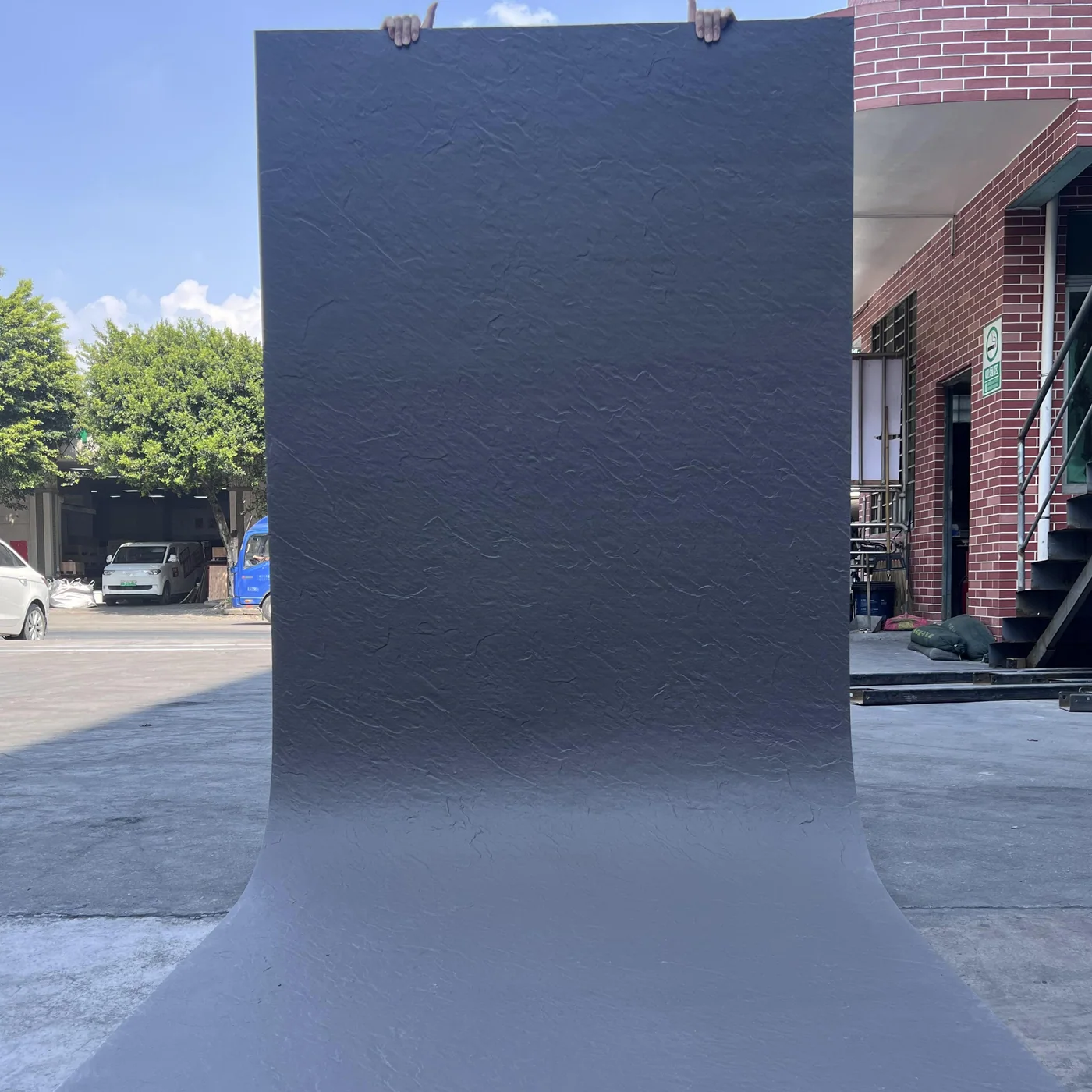
Both options carry a stone surface. The difference is weight, thickness, substrate requirements and installation time. Here is how they compare on the details that decide a project.
Weight and structural impact
Traditional stone cladding is 20–30 mm thick and weighs 50–80 kg/m². Flexible veneer is 2–4 mm and 3–5 kg/m². On a renovation, that difference can remove the need for new framing, anchors or a structural assessment. On new build it can reduce the dead load allowance.
Curves and corners
Solid stone cannot follow a tight curve. A curved wall is built from many mitred pieces with visible joints, or from a cast substitute. Flexible veneer bends around a 200–300 mm radius in one piece, so columns and curved walls read as a continuous stone surface.
Installation
Traditional cladding needs mechanical fixings, a drained cavity and a specialist crew. Flexible veneer is glued with a notched trowel and cut with a utility knife. A small interior wall can be finished by one installer in a day; a facade still needs careful setting out and sealing, but the programme is much shorter.
Appearance
Both carry a stone surface, so both show natural shade variation. Traditional cladding shows a thicker edge at reveals and corners; flexible veneer shows a thin, almost paper-like edge, which is usually hidden with a trim or shadow gap. At close range, the thin edge is the most obvious visual difference.
Cost
Flexible veneer usually costs more per square metre in material than a basic local stone tile, but less in labour and substrate preparation. For renovations and curved details, the installed cost is often lower. For a large, flat, ground-level facade with easy access, traditional stone can be competitive.
Which should you choose?
- Choose flexible veneer for renovations, curves, columns, ceilings, lightweight structures and fast programmes.
- Choose traditional stone for heavy public cladding where thick edges, deep reveals and maximum impact resistance are required.
Many projects use both: traditional stone at ground level and flexible veneer above or around curves.